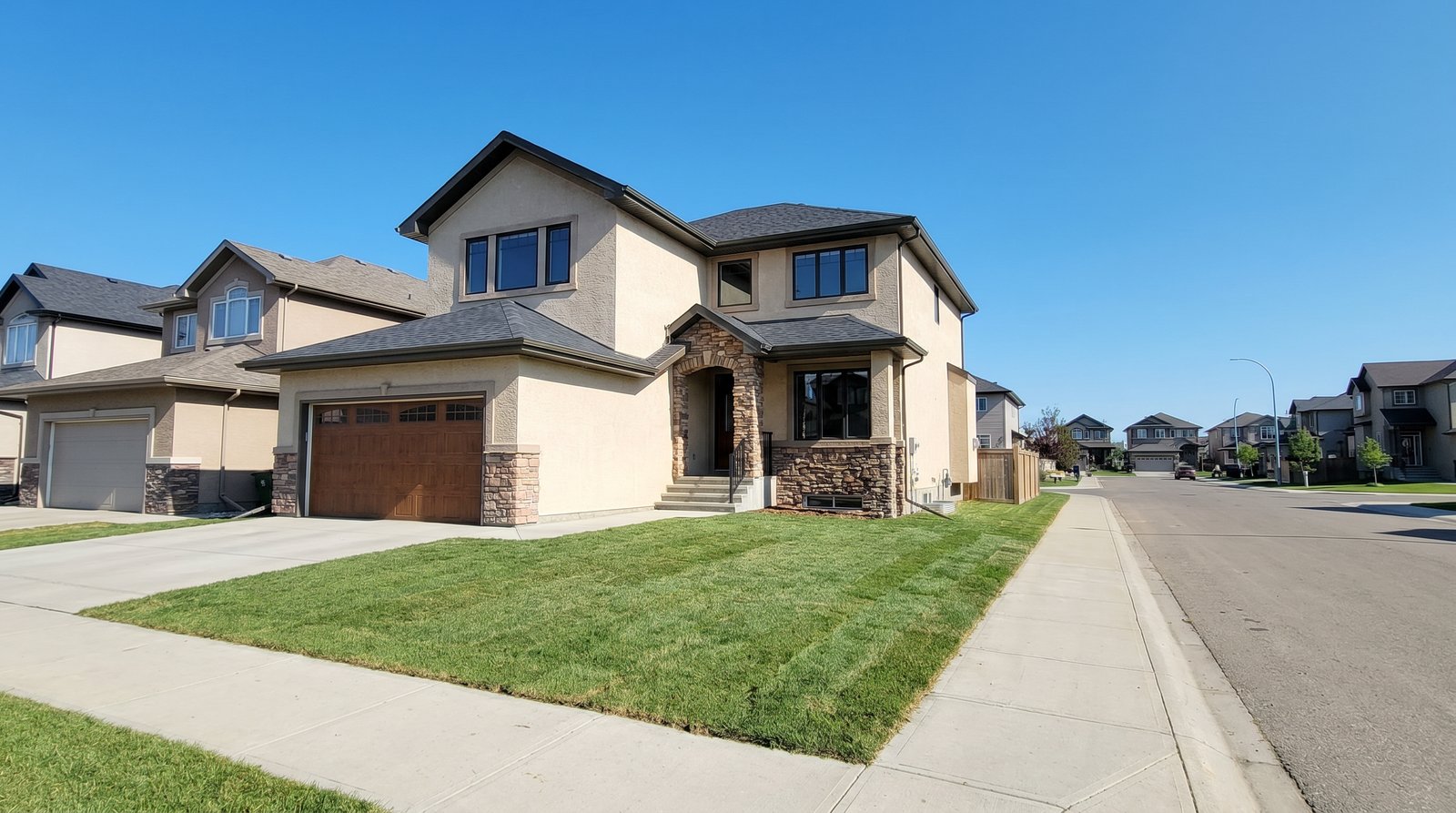
Terwillegar Foundation Problems: Why Newer Edmonton Homes Settle Too
Quick Answer: Terwillegar foundation problems usually come from newer homes settling, not old concrete failing. Most of the area was built after 1995 on former graded farmland, so footings sit on disturbed fill over Edmonton clay. Some settlement in the first decade is normal; cracks wider than a quarter inch are not.
Most people assume foundation trouble is an old-house problem. In Terwillegar, it is often the opposite. This is one of the newest parts of Edmonton, and a lot of the homes here are still settling into the ground they were built on. If you bought a house in Terwillegar Towne, South Terwillegar, or MacTaggart and you are seeing cracks, you are not imagining it, and you are not alone.
Here is what actually drives Terwillegar foundation problems, how to tell normal settling from a real issue, and where your new-home warranty fits in.
Terwillegar is one of the southwest Edmonton neighbourhoods on our route, and the clay-driven movement explained here is a pattern we trace from lot to lot across that corner of the city before recommending any levelling plan.
Newer Homes Settle Too. Terwillegar Proves It
Terwillegar is young by Edmonton standards. That matters, because a foundation does not finish moving the day the house is built.
When Terwillegar Was Built
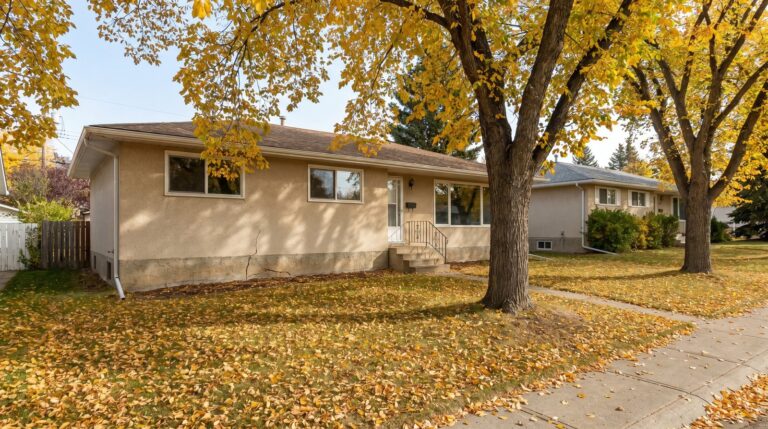
Almost all of Terwillegar’s residential construction happened after 1995. Terwillegar Towne was the first Edmonton community planned on a neo-traditional, New Urbanism model, and it filled in through the late 1990s and 2000s. MacTaggart came later again, with its area structure plan adopted in 2005 and homes built mostly after that. These houses went up fast, during a building boom, on land that was farmland a few years earlier. That combination, recent construction on freshly graded ground, is exactly the recipe for the settlement we get called about.
The southwest side of Edmonton sits on the same glacial till and lacustrine clay as the rest of the city. The difference in Terwillegar is not the deep soil. It is what happened to the ground in the few years before and after the house was built.
How a House Built on Graded Farmland Settles
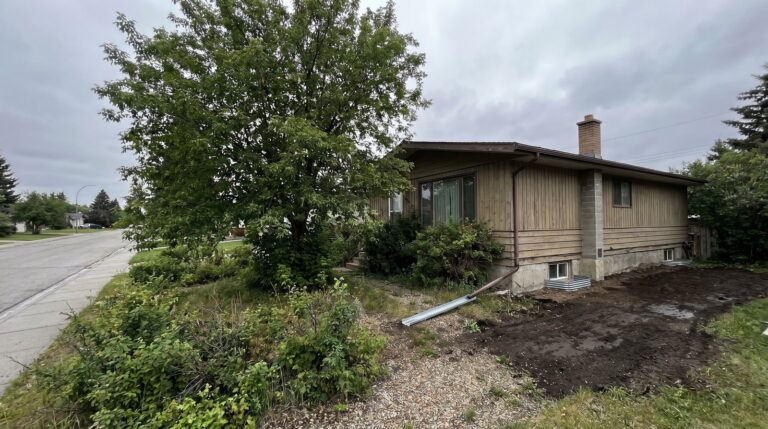
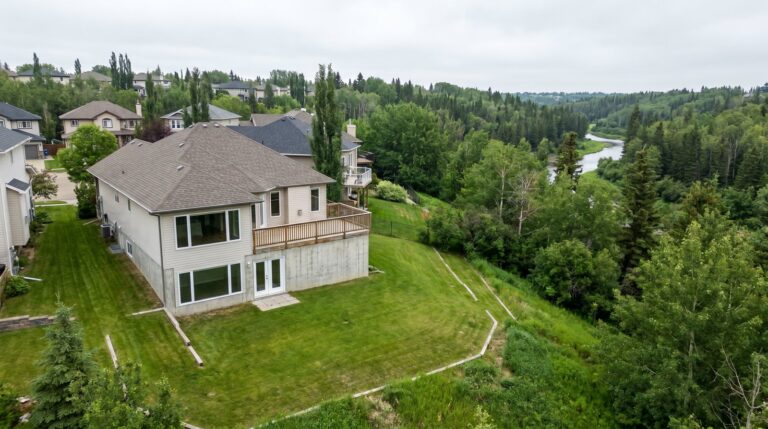
Turning a quarter section of farmland into a subdivision moves a lot of dirt. The land gets cut and filled to create roads, lots, and drainage slopes. Some homes end up with footings on original undisturbed soil. Others sit partly on fill that was placed and compacted during development. Those two situations do not settle the same way.
Why Disturbed Fill Is the Issue
The National Building Code requires footings to bear on undisturbed soil or on engineered fill that has been properly compacted. When fill is placed in a hurry or compacted unevenly, it keeps consolidating under the weight of the house for years afterward. Edmonton clay makes it worse: the fill holds moisture, swells, and shrinks with the seasons, and any soft pocket under a footing lets that corner drop. This is the same shrink-swell movement behind settlement and heave, just acting on a foundation that has not finished settling in the first place. It is why a Terwillegar home can sit fine for five years, then open a crack in year seven after a couple of dry summers.
None of this means your builder cut corners. Plenty of it is just how new construction on Prairie clay behaves. But it does mean “the house is new, so the foundation is fine” is not a safe assumption in Terwillegar.
The Warranty Clock: What Alberta New Home Warranty Covers
If your Terwillegar home is still fairly new, the most important thing to understand is the warranty timeline, because the clock is probably already running.
Alberta New Home Warranty, In Plain Terms
- 1 year: defects in materials and labour (the cosmetic stuff, finishes, minor cracks).
- 2 years: defects in labour and materials for the delivery and distribution systems, plus the building envelope.
- 5 years: building envelope, with possible extension.
- 10 years: structural defects, which includes the frame and the foundation.
The program treats hairline cracks under about 1/16 inch as normal shrinkage that needs no repair. The trap is that real settlement often shows up after the one-year cosmetic window but well inside the ten-year structural window. So a crack you ignored as cosmetic in year one can become a structural conversation in year six, and it may still be covered.
Do Not Wait Out the Warranty
If you see a crack wider than a quarter inch, a crack that is clearly growing, doors and windows that have started sticking, or water entering through a crack, document it and act. Photograph it with a coin for scale and date the photo. Those are the signs that move a problem from normal settling into builder-warranty or repair territory, and waiting until year eleven to deal with it removes your best option.
Normal Settlement vs a Real Problem
The honest answer is that most cracks in a newer Terwillegar home are cosmetic. The skill is telling the difference without guessing.
A Quick Check Before You Call Anyone
Measure the widest point of the crack with the edge of a credit card or a coin. Under 1/16 inch, with no other symptoms, is almost always normal new-home shrinkage, so photograph it and watch it. Between 1/16 and 1/4 inch, especially if it is diagonal from a window corner or paired with a sticking door, is worth a free visual inspection. Over 1/4 inch, or any horizontal crack, or any crack letting water in, means get it looked at this season rather than next.
Tim Phillips, Alberta Foundation Repair: “I get a lot of nervous calls from Terwillegar and MacTaggart homeowners with a hairline crack on a five-year-old house, and most of the time I can tell them to relax and just watch it. But every so often I inspect one on site and the corner is sitting over a soft fill pocket that never finished settling. You cannot tell those two apart from a photo. That is the whole reason I come out and read the foundation in person before I say anything definite.”
What We Look For on a Terwillegar Foundation
On a newer home, the goal is usually to confirm whether you have ordinary settling or a footing sitting on bad fill, because the answer changes everything about what comes next.
Inspect the Cause, Fix It Right on a Newer Home
- Visual walkthrough (no charge): Tim reads the crack pattern, checks the grade and downspouts, and tells you straight whether this looks like normal settling or something more.
- On-site inspection: Tim inspects the foundation in person to work out how deep the footing was poured (Edmonton’s design frost depth is 2.4 metres) and to look for signs of voids or saturated fill under the slab. On a newer build, confirming the footing depth alone answers a lot. Read more on how Edmonton foundation repair works.
- The repair: sound cracks that are just settling get polyurethane or epoxy injection, roughly $1,500 to $3,500 per crack. A corner genuinely sitting on soft fill may need helical piers to reach stable soil, which starts around $4,000 per area and needs an engineer and a City of Edmonton permit.
- Verify: we re-check the foundation after any structural work so you can see it is holding.
Tim Phillips, Alberta Foundation Repair: “If your house is still under warranty, my honest advice is to get the documentation right first. A dated inspection report showing exactly what is happening under the footing is worth a lot when you go back to your builder. I would rather hand you evidence than sell you a repair the builder should be covering.”
Older parts of the city have the reverse problem: aged concrete and aggressive soil chemistry, like we cover in our Millwoods foundation guide. Terwillegar’s issues are newer-home issues, and the fixes are usually simpler when you catch them early. If you want the numbers first, our 2026 foundation cost guide lays them out.
Frequently Asked Questions
My Terwillegar house is only a few years old. Why does it have foundation cracks?
Newer homes settle, especially on graded subdivision land. Most of Terwillegar was built after 1995 on former farmland that was cut and filled during development. Footings on freshly placed fill keep consolidating for years, and Edmonton clay swells and shrinks on top of that. Most of these cracks are normal, but they are worth checking if they grow past a quarter inch.
Is foundation settlement covered by my new home warranty in Alberta?
It can be. Alberta New Home Warranty covers structural defects, including the foundation, for ten years. Hairline shrinkage cracks under about 1/16 inch are considered normal and are not covered. Cracks that are wider, growing, or letting water in may qualify, so document them with dated photos and contact your builder before the coverage period ends.
How can I tell if my Terwillegar crack is serious?
Width and direction are the quick test. Under 1/16 inch with no other symptoms is usually normal new-home settling. Between 1/16 and 1/4 inch, particularly diagonal cracks from window corners or cracks paired with sticking doors, is worth a free visual inspection. Anything over 1/4 inch, any horizontal crack, or any crack letting in water should be looked at promptly.
Does Terwillegar have the same clay soil problems as the rest of Edmonton?
Yes, the deep soil is the same glacial till and clay found across Edmonton. The difference in Terwillegar is the disturbed fill from recent development sitting on top of that clay. The combination of settling fill and seasonal clay movement is what drives most foundation issues here, rather than the aging concrete you see in older neighbourhoods.
Should I get a foundation inspection before the warranty runs out?
If you have any cracks you are unsure about, yes. A visual inspection is free, and a documented look at the foundation before your structural warranty period ends protects you. If there is a real problem, having it on record while you are still covered gives you options you lose once the warranty expires.
Sources
- Alberta New Home Warranty Program. House Settlement: What You Need to Know. Link
- Government of Alberta. New Home Warranty Overview (coverage periods, structural defects). Link
- National Research Council Canada. National Building Code of Canada (footings on undisturbed or engineered soil, frost depth). Link
- Alberta Geological Survey. Surficial Geology of the Edmonton District (glacial till and lacustrine clay). Link
- City of Edmonton. Building Permits for Foundation and Structural Repair. Link
- Mitchell, J.K. and Soga, K. (2005). Fundamentals of Soil Behavior, 3rd ed. Wiley (consolidation and expansive clay behaviour).
Get Your Terwillegar Foundation Inspected
If you have a crack you are not sure about, especially while your home is still under warranty, it is worth a straight answer before it grows. A visual walkthrough costs nothing and tells you whether you are watching or fixing.
Alberta Foundation Repair, serving Terwillegar and the wider Edmonton area, (519) 732-1964
Tim inspects every foundation on site and identifies the cause before starting any repair. On a newer Terwillegar home, that means knowing whether it is normal settling or a footing on bad fill before anyone quotes you a thing.