Old Strathcona Foundation Problems: Caring for a Century Home
Quick Answer: Old Strathcona foundation problems are century-home problems. Many houses here predate the 1912 amalgamation and sit on rubble stone, brick, or early unreinforced concrete, poured before damp-proofing and weeping tile were standard. The right fix suits the original foundation rather than fighting it. Edmonton clay and trees do the rest.
Old Strathcona is one of the oldest parts of Edmonton, and that shows up in the basements. A foundation on a Whyte Avenue side street might be older than the province itself. When you are dealing with a century home, the usual foundation advice written for a 1990s build does not quite fit. The materials are different, the original construction standards were different, and the right repair is the one that respects what is already there.
Here is what is actually under these homes, why they move, and how to fix them without wrecking the character you paid for.
Old Strathcona’s heritage housing stock sits among the older central Edmonton districts we look after, and the issues these homes face often look very different from the foundation problems newer suburbs run into just a few kilometres away.
A Foundation That Predates Modern Concrete
To understand a Strathcona foundation, it helps to know when it went in the ground.
How Old Are Old Strathcona Homes?
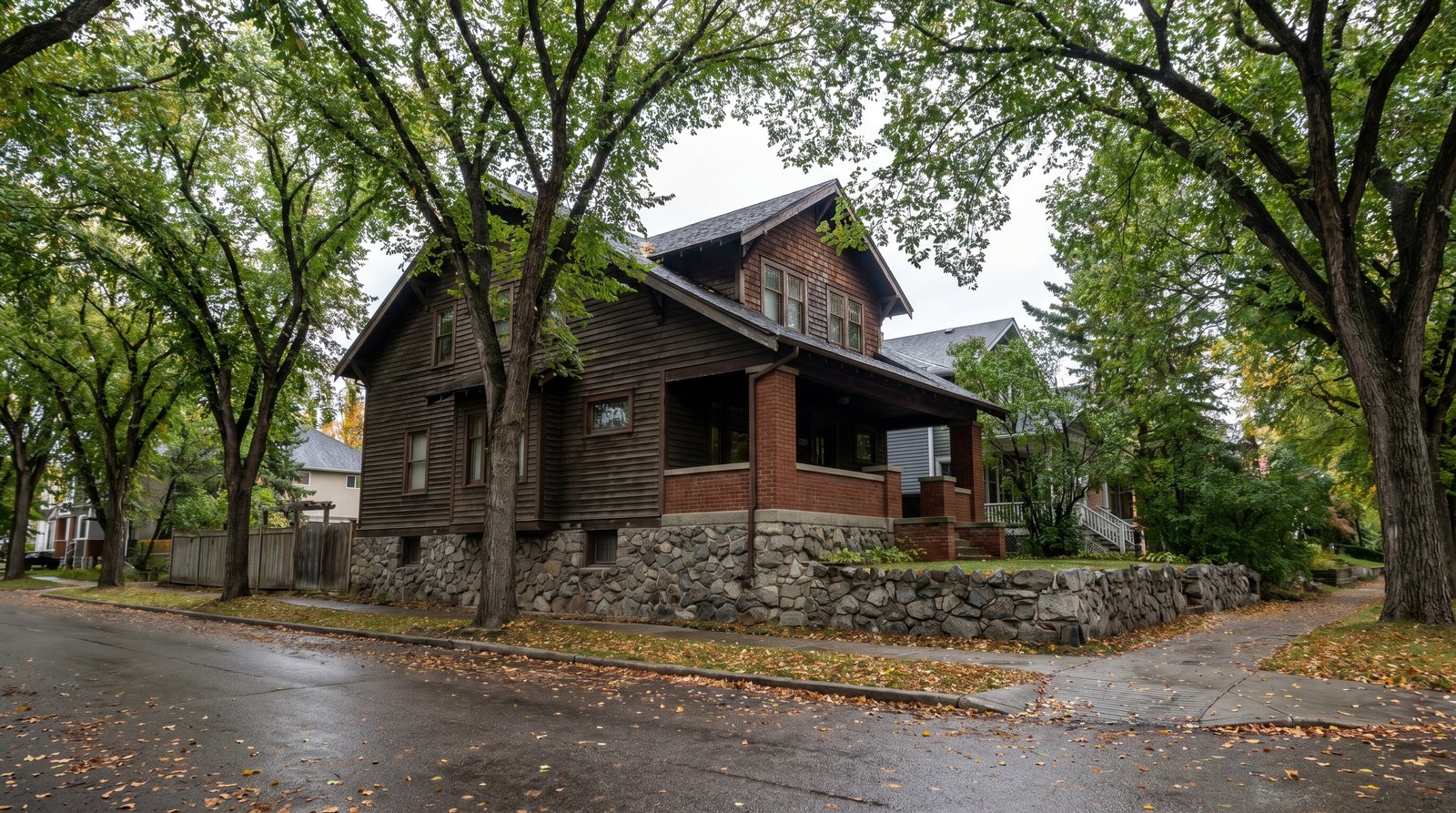
Strathcona started as South Edmonton when the Calgary and Edmonton Railway arrived in 1891. It became a town in 1899, a city in 1907, and amalgamated with Edmonton in 1912. The big residential boom ran through 1910 to 1912, which is why so much of the housing stock is now well over a hundred years old. In 2007 the area was named Alberta’s second Provincial Historic Area. A home from that era was built before reinforced concrete was standard residential practice, before weeping tile, and before anyone was thinking about vapour barriers.
That history is the whole point. You are not maintaining a modern poured wall. You are maintaining a piece of early Edmonton, and it was built with what was available at the time.
What Is Actually Under an Old Strathcona House
Lift the carpet on the foundation question and you find a few different things under century homes, depending on exactly when the house was built and who built it.
Foundation Types You Find in Strathcona
The oldest homes often sit on rubble stone foundations, irregular fieldstone laid up with lime-based mortar. Lime mortar is softer than modern cement mortar and it slowly washes out over a century, which is why these walls can bulge or shed material. Slightly newer homes use early unreinforced concrete or clay brick footings, and later ones use concrete or cinder block. Almost none of them were built with exterior damp-proofing or a weeping tile drainage system, because those were not standard practice yet. So a Strathcona basement is often managing groundwater the way it has for a hundred years, through a wall that was never sealed in the first place.
This is why a generic crack-injection pitch can miss the mark here. You cannot inject a rubble wall the way you inject a poured one. The repair has to match the material, and you have to know what the material is before you start.
Why Century Homes in Strathcona Move
The soil under Strathcona is the same Edmonton clay that troubles the rest of the city. What is different is how long these foundations have been dealing with it, and what is growing around them.
The Mature-Neighbourhood Cocktail
Three things stack up under an old Strathcona home. First, Edmonton clay swells and shrinks with the seasons, putting a hundred years of repeated stress on the wall. Second, the big boulevard elms and maples that make these streets beautiful pull huge volumes of moisture out of the clay in summer, which shrinks the soil under the nearest foundation corner and drops it. Third, a century of Edmonton freeze-thaw, with a design frost depth of 2.4 metres, has worked on concrete and mortar that were never as strong as modern mixes to begin with. Put those together and you get the slow, uneven movement that opens cracks in old basements, most often the horizontal and diagonal cracks typical of mature homes.
Tim Phillips, Alberta Foundation Repair: “In Strathcona the tree is often the thing nobody suspects. I will find a big old elm twelve feet off the corner of the house, and that corner is the one that has dropped. The homeowner has been worrying about the foundation for years and the real driver is the tree drinking the clay dry every July. You have to read the whole lot, not just the crack.”
Repairing a Century Foundation Without Wrecking the Character
This is where old homes need a different conversation. The goal is a repair that lasts without erasing what makes the house worth owning.
How Old-Home Repairs Differ
- Rubble and stone walls: these are usually stabilised and sometimes parged or rebuilt in sections, not injected. A badly bulged rubble wall may need underpinning or a new interior structural wall, which is a job for an engineer.
- Early concrete with cracks: if the concrete is sound, polyurethane or epoxy injection works, roughly $1,500 to $3,500 per crack. If it is crumbling, injection will not hold.
- Settled corners: underpinning the wall or helical piers reach stable soil below the old footing, generally $4,000 and up per area.
- Drainage: since most of these homes never had weeping tile, adding proper drainage often does more good than any patch.
Heritage Status Changes the Process
Old Strathcona is a Provincial Historic Area, and some individual homes carry heritage designation. If yours does, exterior work can have extra approval steps, and you want a contractor who will not just bulldoze a hundred-year-old wall because it is faster. Structural repairs in Edmonton already need an engineer’s stamp and a City permit. On a designated home, check the heritage requirements before anyone starts.
What to Watch For in a Century-Home Basement
A Walkthrough for Old-Home Owners
In a century basement, look for mortar that crumbles to sand between stones, a rubble or block wall that is leaning or bulging inward, damp patches or white salt crust low on the wall, and corners that have dropped (check whether floors slope toward an outside wall near a big tree). Photograph anything you find and date it. None of this means the house is failing. These foundations have stood for a hundred years. It means you want to catch movement while it is still a small repair.
How We Approach an Old Strathcona Foundation
With a century home, the single most useful thing is finding out what you are actually dealing with before spending a dollar, because nobody has accurate drawings of a 1910 foundation.
Inspect the Cause, Fix It Right on a Century Home
- Visual walkthrough (no charge): Tim looks at the foundation type, the mortar, the grade, the trees, and the drainage, and gives you an honest read on site.
- On-site inspection of the foundation: on an old foundation this matters, because Tim inspects the wall, the footing line, and the surrounding grade to identify why the foundation is moving and what the wall is actually made of. You cannot judge any of that from a generic quote, so Tim reads the cause on site before recommending anything.
- The repair: matched to the material, stabilise and drain a rubble wall, inject sound concrete, underpin a dropped corner. Always an engineer and permit for structural work.
- Verify: we check the foundation again after structural work so you can see it is holding.
Tim Phillips, Alberta Foundation Repair: “I love these old Strathcona houses, so I hate seeing someone talked into ripping out a sound rubble wall because a salesman only knew how to quote poured concrete. Inspect the foundation first and find out why it is moving. Half the time the wall is fine and the real job is fixing the drainage and the grade. You can respect the house and still fix it properly.”
Newer parts of the city have the opposite situation, recent builds still settling in, which we cover in our Terwillegar guide. Strathcona is the other end of that spectrum, and it rewards patience and the right diagnosis.
Frequently Asked Questions
Is it normal for a hundred-year-old Strathcona foundation to have cracks?
Some movement over a century is expected, and many cracks in old foundations are stable and old themselves. What matters is whether a crack is active. Photograph it, date the photo, and watch it over a season. A crack that is growing, leaking, or paired with a leaning wall is worth a free visual inspection. A stable hairline that has not changed in years is usually just the house’s history.
Can you repair a rubble stone foundation, or does it need replacing?
Most rubble foundations can be stabilised rather than replaced. Depending on condition, that can mean repointing the mortar, parging, adding interior structural support, or underpinning a settled section. Full replacement is a last resort. The first step is an on-site inspection to read how thick and sound the wall actually is, because rubble walls hide their condition.
Why does my old Strathcona basement leak when it never used to?
Most century homes were built without exterior damp-proofing or weeping tile, so they have always managed water through the wall. Over time, grading settles, mortar washes out, and old drainage clogs, so a basement that coped for decades starts to seep. Often the fix is improving drainage and grade rather than sealing the wall, which can trap moisture in old masonry.
Will foundation repair hurt the heritage value of my home?
Done correctly, no. Good repair preserves the structure and the character. The risk is a contractor who only knows modern methods removing original material that could have been saved. If your home carries heritage designation, check the approval requirements first, and choose someone who will match the repair to the original foundation.
Should I remove the big tree next to my foundation?
Not automatically. Mature boulevard trees are part of what makes Strathcona valuable, and removal has its own consequences for the soil. Often the better answer is managing moisture around the foundation with drainage and watering during drought so the clay does not shrink as much. We would look at the specific tree, corner, and soil before recommending anything that drastic.
Sources
- City of Edmonton Archives. Sketching History: Strathcona Neighbourhood (founding 1891, amalgamation 1912). Link
- Alberta Register of Historic Places. Old Strathcona Provincial Historic Area. Link
- National Research Council Canada. National Building Code of Canada (frost depth and footing provisions). Link
- Canada Mortgage and Housing Corporation. Moisture Problems and Remedies in Older Homes. Link
- Alberta Geological Survey. Surficial Geology of the Edmonton District (glacial till and lacustrine clay). Link
- Mitchell, J.K. and Soga, K. (2005). Fundamentals of Soil Behavior, 3rd ed. Wiley (expansive clay and tree-induced shrinkage).
Get Your Old Strathcona Foundation Inspected
If you own a character home and you are unsure what is under it or whether that crack matters, it is worth a straight answer from someone who respects old houses. A visual walkthrough costs nothing.
Alberta Foundation Repair, serving Old Strathcona and the rest of the areas we cover, (519) 732-1964
Tim inspects every foundation on site before starting any repair. On a century home, that means knowing exactly what the wall is made of and why it is moving before anyone touches it.