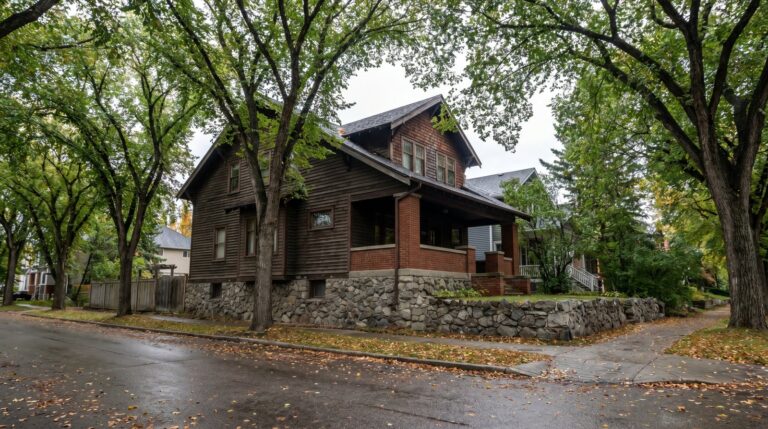
Why Edmonton Foundations Crack in February
Quick Answer: January is Edmonton’s coldest month, but February is when foundations crack most. By late February, Edmonton’s clay soil has frozen to its full 2.4-metre design depth after four months of accumulation. Concrete contracts from thermal stress as ice expands inside existing cracks. February reveals the damage; October creates the risk.
In This Guide
Cracks that form during February freeze cycles often do not show their real problem until April or May, when snow melts around the foundation and pushes water through. If you are reading this in spring with water coming through one of those cracks right now, jump to our spring snow-melt leak guide.
- The January Paradox: Coldest Month, Not the Worst Month
- How October Sets Up February Damage
- The Two Mechanisms Acting on Your Foundation in February
- Why Frost Depth Matters More Than Air Temperature
- The Snowpack Wild Card
- March and April: When the Damage Becomes Visible
- What to Do in October Before Winter Starts
- Frequently Asked Questions
Reading time: 9 minutes
Most Edmonton homeowners assume January is the danger month for foundations. It makes sense. January is the coldest month, the deepest cold snaps hit in January, and most people think cold equals damage. The calendar says January but the foundation says February.
The reason is not what the thermometer reads. It is what has been happening underground since October. This article explains the mechanics of winter foundation damage in Edmonton: why February is the peak damage period, why two separate physical processes are at work simultaneously, and what you should actually be doing in October to reduce the risk.
Our cold months put real stress on concrete, and frost is behind much of the foundation repair we do in Edmonton once spring arrives. Let’s look at exactly how winter forces open the cracks you start noticing.
The January Paradox: Coldest Month, Not the Worst Month

Environment Canada’s climate normals (1981-2010) for Edmonton International Airport tell a clear story on air temperature:
| Month | Mean Daily Temp | Average High | Average Low | Days Below -20°C | Frost Depth Status |
|---|---|---|---|---|---|
| October | +4.4°C | +10.1°C | -1.3°C | 0 | Freezing begins near surface |
| November | -5.0°C | -0.3°C | -9.8°C | 1-2 | Frost penetrating to 30-60 cm |
| December | -10.2°C | -5.5°C | -15.0°C | 6-8 | Frost at 60-120 cm depth |
| January | -10.3°C | -5.8°C | -14.7°C | ~9 | Frost reaching 1.2-1.8 m depth |
| February | -7.9°C | -3.0°C | -12.7°C | ~6 | Frost at maximum: 1.8-2.4 m depth |
| March | -2.2°C | +2.7°C | -7.1°C | 1-2 | Maximum frost depth; thaw begins from surface |
January is colder by thermometer. But the soil does not respond immediately to air temperature. Ground temperature lags air temperature by weeks to months. The frost front that began its descent in October keeps moving downward throughout January, and it reaches its maximum depth in late February or early March. By the time February arrives, the soil has been freezing progressively deeper for four months. The foundation wall is under more lateral pressure in February than at any other point in the year.
Tim Phillips, Alberta Foundation Repair: “The call volume tells the story. We get the most calls in March and April, from homeowners who found a crack or water in their basement after the snow melted. When I ask them when they last walked the basement, the answer is usually ‘October.’ The crack that shocked them in April was forming all winter. They just did not know it was happening.”
How October Sets Up February Damage
To understand February, you have to follow a single drop of water from September.
In September, Edmonton’s average first frost arrives around September 24. September rain has saturated the soil around your foundation. The clay that makes up Edmonton’s glacial lacustrine subsoil is holding far more moisture than it will in summer. Some of that water is sitting in hairline cracks in your foundation wall, invisible to the naked eye.
October temperatures begin crossing 0°C at night. The water in those hairline cracks freezes, expands by 9% in volume, and slightly widens the crack. The cycle repeats. Each freeze-thaw event allows slightly more water to enter the slightly wider opening. By the time the sustained freeze of November arrives, your 0.1 mm hairline crack may already be 0.3 mm wide.
Through December, January, and February, that water is now frozen solid in the crack. It sits there, exerting sustained outward pressure on the crack faces, as the temperature drops and the ice in the crack expands even further. By February, your formerly invisible crack may be 1 to 3 mm wide. Wide enough to see. Wide enough for water to enter freely during the March thaw.
This is the sequence. The damage is not a February event. It is an October-to-February accumulation that February reveals. The homeowner notices a crack in April that they attribute to spring. The crack has been there since December.
The Two Mechanisms Acting on Your Foundation in February
A crack that appears or widens during the Edmonton winter window almost always skews toward Tier 1 or Tier 2 on our foundation crack emergency framework, because frozen soil will keep working on the weakness until spring thaw.
In February, your foundation is under attack from two separate physical processes operating simultaneously. Most Edmonton contractors describe one of them. Both matter.
Mechanism 1: Thermal Contraction of the Concrete Wall
Concrete expands and contracts with temperature changes. The coefficient of thermal expansion for concrete is approximately 10 x 10⁻⁶ per °C (ten millionths of a metre per metre of wall per degree of temperature change). Over Edmonton’s full seasonal swing (roughly +10°C in summer to -30°C in the coldest February nights), a 40°C temperature range.
For a 10-metre foundation wall, the calculation is: 10 m × (10 × 10⁻⁶/°C) × 40°C = 4 millimetres of contraction. That does not sound like much. But if the wall cannot move freely because the footing is holding it at the base and the floor system is holding it at the top, that 4 mm of contraction becomes tensile stress. Concrete’s tensile strength is 2 to 5 MPa. When the restraint-induced stress exceeds that threshold, the wall cracks rather than contracts. The crack opens widest during the coldest nights in January and February, when the temperature drop is steepest and the contraction force is greatest.
Mechanism 2: Ice Wedging in Existing Cracks
Water expands by 9% in volume when it freezes at 0°C. At -20°C, ice occupies approximately 16.8% more volume than the liquid water it replaced. In a confined crack, that expansion has nowhere to go but outward, pushing the crack faces apart.
The pressure generated by freezing water in a confined space is extraordinary. Engineering research documents freezing water pressure reaching 2,100 kg/cm² (approximately 206 MPa) at -22°C under full confinement. Concrete’s tensile strength is 2 to 5 MPa. Ice expansion pressure overwhelms concrete’s resistance by orders of magnitude. Even in a partially confined crack with some pressure relief, the widening force is far greater than what the concrete can resist. A hairline crack that fills with water in October and remains frozen from December through February will be measurably wider by spring.
These two mechanisms are additive. On the coldest February night, your foundation wall is simultaneously contracting from thermal stress AND being pried apart by ice crystals expanding in every existing crack. The combination is why February is the peak damage month even though January has colder average temperatures.
Why Frost Depth Matters More Than Air Temperature
Frost action is the primary heave mechanism driving February foundation movement. For the full comparison of heave versus settlement (the downward-movement mechanism that dominates summer), see settlement vs heave in Edmonton.
The second reason February is the most damaging month is underground, not in the air. Edmonton’s design frost penetration depth is 2.4 metres below grade. That is not reached overnight. It is reached at the end of a four-month accumulation of cold, and that accumulation peaks in late February.
Edmonton Frost Depth: What the Numbers Mean for Your Foundation
Geotechnical engineers measure frost depth using cumulative freezing-degree-days, a running total of how much cold has accumulated since the season began. In Edmonton, the freezing-degree-day total rises from October through January and reaches its maximum in late January or February. Ground temperature lags air temperature by four to eight weeks in clay soils, so even if February air temperatures are slightly milder than January’s, the ground is colder in February because it is still responding to December and January’s deep cold. Edmonton’s glacial lacustrine clay (classified as F3 moderately-to-highly frost-susceptible per the Canadian Foundation Engineering Manual) is particularly effective at transmitting cold downward and generating ice lenses at the freezing front. By late February, the frost front has reached between 1.8 and 2.4 metres below grade, meaning the entire foundation wall from footing to frost line is under lateral pressure from frozen expanding clay. This is the highest mechanical load the foundation experiences all year.
At that frost depth, ice lens formation is at its maximum. The National Research Council of Canada’s Building Digest CBD-26 documents frost heave pressures up to 213 psi (1,470 kPa) in clay soil conditions similar to Edmonton’s. The same research records vertical displacements of 4 to 8 inches in heavily frost-susceptible soils. Ice lenses grow as long as water migrates toward the freezing front via capillary action. In Edmonton’s wet spring soils, that water supply is effectively unlimited through the winter.
The frost depth at its maximum depth also coincides with the maximum bending moment on your foundation wall. For more on why this matters structurally, see our guide on horizontal foundation cracks in Edmonton.
The Snowpack Wild Card
The damage that February did to your foundation is most visible in April. The week-by-week walk-through in spring foundation inspection Edmonton covers the four-week window when problems are easiest to catch.
Edmonton’s average snowpack is approximately 18 centimetres deep mid-winter. That snowpack acts as an insulating blanket over the ground, slowing the penetration of cold air into the soil. It also prevents the surface soil from freezing and thawing as rapidly as the air temperature suggests.
Here is what changes when a warm February spell melts that snowpack:
- The ground is now exposed with no insulating layer. The next cold snap can penetrate directly to the soil surface, which is now already frozen below but suddenly subject to rapid surface cooling.
- Meltwater has nowhere to drain. The subsoil is frozen solid. Water from the melted snowpack pools on the surface and flows toward the lowest point, which is often the foundation wall or window well. This is concentrated water loading against a foundation that is already under maximum mechanical stress.
- Freeze-thaw cycles increase. February temperature data shows daily highs and lows that cross 0°C, generating 6-11 freeze-thaw cycles per month. Without snowpack insulation, bare soil experiences those same freeze-thaw transitions more intensely.
This snowpack dynamic is specific to Edmonton’s February climate and is absent from most general discussions of winter foundation damage. It is one reason February storms that alternate between warm melt days and cold refreezing nights can produce more visible crack damage than a sustained December cold snap at -30°C.
March and April: When the Damage Becomes Visible
Edmonton’s last spring frost averages around May 7, but meaningful warming begins in March. This is when the damage accumulation of winter becomes visible.
The sequence in March and April:
March: Air temperatures begin crossing 0°C more regularly. Surface snow and ice melt. Meltwater percolates toward the foundation but cannot penetrate the still-frozen subsoil. Hydrostatic pressure builds against foundation walls as water accumulates at the frost line. Cracks that widened through winter are now open channels for that water. The basement that was dry all February now has a seeping wall.
April: Ice lenses at 1.5 to 2.4 metres depth begin to melt. The soil that was elevated by ice lens growth drops back down in differential settlement, because the heave was never perfectly uniform. Areas under the footing that had ice lenses are now voids as the ice melts. Soil temporarily loses shear strength as water-saturated clay transitions from frozen to liquid. Foundations settle unevenly. Diagonal cracks appear at wall corners and window openings. Doors and windows stick in frames that have racked slightly from the differential movement.
The homeowner walks the basement in April and finds cracks they do not remember from October. They conclude the foundation cracked in spring. In almost every case, the damage began in December and reached its maximum extent in February. Spring simply lifted the curtain.
Tim Phillips, Alberta Foundation Repair: “When I look at a crack and the homeowner says it ‘appeared in April,’ I inspect the wall on site and read the cause: where the water is tracking, how the crack runs from top to bottom, whether the soil outside has dropped or heaved. Those signs tell you how long the damage has been developing. April cracks in Edmonton almost never started in April. The ground has been working on them since October.”
What to Do in October Before Winter Starts
October is your window. The soil is still unfrozen, drainage repairs can still be made, and cracks can be assessed and sealed before water infiltrates them for the winter. Here is what Tim recommends before the first snowfall locks in any damage patterns for another season.
October Foundation Inspection and Preparation Checklist
- Inspect grading around the foundation: Soil should slope away from the house at minimum 6 inches of drop over the first 10 feet. Fill any depressions that pool water near the foundation. Use clay-rich fill, not loose topsoil, which settles and allows pooling.
- Check and extend downspouts: Every downspout should discharge at least 1.5 to 2 metres from the foundation. Clogged or short downspouts deposit thousands of litres of water against the foundation annually. Clean gutters before leaf fall so meltwater can drain through the winter.
- Walk the basement looking for new cracks: Any crack you did not see last October should be noted and dated. A 0.1 mm hairline crack that is visible now will be 0.5 to 1 mm wide by spring if water infiltrates it through winter. Early sealing with epoxy injection costs a fraction of what spring structural repair costs. For crack type guidance, see our guide on types of foundation cracks in Edmonton.
- Check window well drainage: Window wells that fill with leaves trap water against basement window frames and allow infiltration. Clear them and ensure the drain (if present) is not blocked. Window well covers reduce snow accumulation in winter.
- Test the sump pump: Pour a bucket of water into the pit and confirm the float switch activates and the pump discharges properly. Check that the discharge line terminates away from the foundation and is not likely to freeze at its outlet. Install a battery backup if you do not have one. Sump failure during a March thaw event is one of the most common causes of serious basement flooding in Edmonton.
- Manage indoor humidity: Target 30-40% relative humidity in the basement through winter. Excess moisture condenses on cold concrete walls, keeping cracks moist and accelerating the freeze-thaw infiltration cycle. A simple dehumidifier and hygrometer can prevent considerable damage over a 5-month Edmonton winter.
- Get a professional assessment if in doubt: If you found cracks in October that you are unsure about, or if your home had water infiltration last spring, an October inspection gives you the most time to act. Tim inspects on site to identify why the foundation is moving before recommending any repair, which means you know whether you are dealing with a surface crack or a deeper structural problem. Learn more on our Edmonton foundation repair page.
Mark Any New Cracks Before Winter
Use a pencil to mark the ends of any crack you find in October. Write the date beside the mark. Check the crack again in January or February (when visible) and again in April. If the crack has extended beyond your marks or has widened, you have documentation of active movement. This record is useful for the contractor who assesses it in spring and helps determine whether the crack is actively progressing or has stabilised. It takes 30 seconds per crack and can save significant guesswork later.
Frequently Asked Questions
Why do foundation cracks appear in spring if the damage happened in winter?
Damage and visibility are two separate events in Edmonton. The mechanical stress on your foundation peaks in February, when frost depth is at its maximum and thermal contraction has reached its full extent. In February, the basement is cold and dry and cracks may be barely perceptible. In March and April, warmer temperatures melt ice in the cracks and shift drainage patterns, making water infiltration obvious. The crack that appeared in April almost always started forming in December.
How much does concrete actually shrink in an Edmonton winter?
A 10-metre concrete foundation wall will contract approximately 4 millimetres across a 40-degree Celsius seasonal temperature swing. This uses the standard coefficient of thermal expansion for concrete (10 x 10⁻⁶ per degree Celsius). If the wall cannot move freely because it is restrained by the footing and floor system, that contraction generates tensile stress. Concrete has low tensile strength (2 to 5 MPa) and will crack before it stretches. New hairline cracks often appear during cold snaps and existing cracks widen during the same events.
Is January or February harder on Edmonton foundations?
January has a colder mean air temperature (-10.3 degrees Celsius versus -7.9 degrees Celsius in February). But February is harder on foundations because frost depth is at its seasonal maximum. Ground temperature lags air temperature by weeks to months. By late February, Edmonton’s clay has been freezing progressively deeper since October and is now at its full design depth of 2.4 metres. That is the highest mechanical load the foundation experiences all year, even though the air is slightly warmer than January.
What is the best time to inspect an Edmonton foundation for winter damage?
October is the best time to inspect before winter. The ground is still unfrozen, drainage work and crack sealing can be done, and grading issues can be corrected before snowfall locks in poor drainage patterns. A second inspection in April, once snow has melted, shows what winter has done and allows spring crack repairs before the wet season adds water pressure to winter-widened gaps. Between these two windows, monthly basement checks through winter provide early warning of progressive crack widening.
Can a foundation crack widen without any visible change to the house?
Yes. A hairline crack that is 0.1 mm wide in September may be 1 to 3 mm wide by February without any other visible sign of damage. The widening occurs because water infiltrates the hairline crack in autumn, freezes and expands repeatedly through winter, and progressively opens the gap each cycle. In a warm basement, this widening may not be noticed until spring meltwater begins entering through what is now a clearly visible crack. This is why October assessments matter most.
Sources
- Environment Canada. (2015). Canadian Climate Normals 1981-2010: Edmonton International Airport (Station 3012205). Meteorological Service of Canada. climate.weather.gc.ca
- National Research Council Canada. (1962). Building Digest CBD-26: Ground Freezing and Frost Heaving. NRC Institute for Research in Construction. web.mit.edu (NRC mirror)
- National Research Council Canada. (1976). Building Digest CBD-182: Frost Action and Foundations. NRC Institute for Research in Construction. web.mit.edu (NRC mirror)
- National Ready Mixed Concrete Association. (2007). CIP-42: Thermal Cracking of Concrete. NRMCA. nrmca.org
- Penn State University, Department of Civil and Environmental Engineering. (2018). CE-584: Thermal Expansion and Contraction of Concrete. Penn State Open Courseware. engr.psu.edu
- Canadian Geotechnical Society. (2023). Canadian Foundation Engineering Manual (CFEM), 5th Edition. Canadian Science Publishing. ISBN 978-0-920505-50-2. cdnsciencepub.com
Get Your Foundation Assessed Before Next Winter
If you found this article in October, you still have time to act. If you found it in March because your basement is wet, you can still get ahead of next winter. Either way, the starting point is understanding what is actually happening underground before making any repair decision.
Alberta Foundation Repair serves Edmonton and surrounding areas: (519) 732-1964
Tim inspects every foundation on site and identifies the cause before recommending any repair. That means you understand why the foundation is moving, whether it is clay heave, settlement, frost, or water, and not just what is visible on the surface. You get answers before anyone starts drilling. The on-site visual inspection is free.